The Details
Wind and Storm Resistance
Wood Frame: Standard wood-frame construction is designed to meet local building codes — which in most areas means withstanding winds in the 90–130 mph range. This is adequate for mild weather. It is not adequate for a direct hit from a major hurricane or significant tornado.
ICF: ICF walls have been tested to resist wind loads equivalent to 250+ mph. The concrete core doesn't flex, bow, or fracture under the lateral pressures that destroy wood framing. Families in our homes have stayed through storms that destroyed surrounding neighborhoods. This isn't marketing — it's what concrete does.
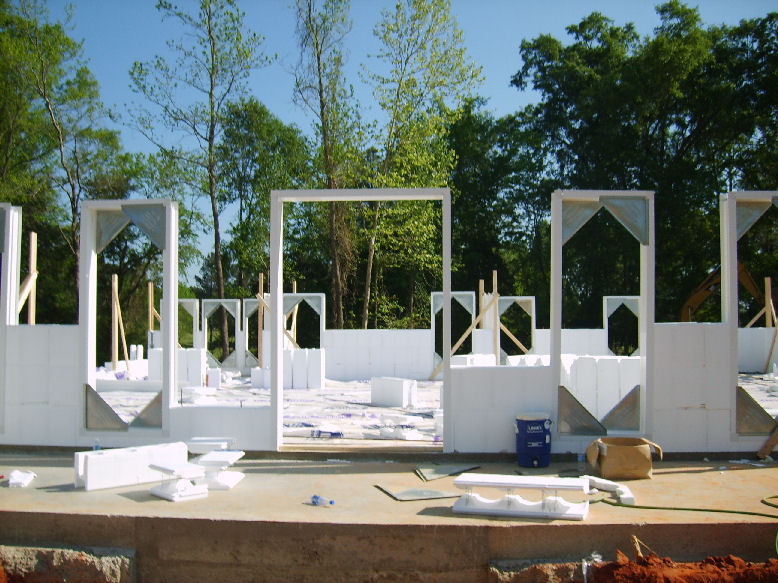
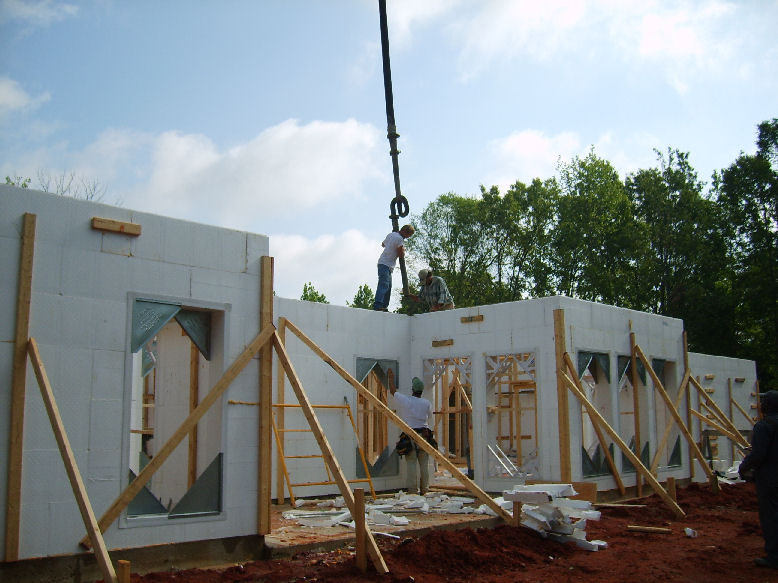
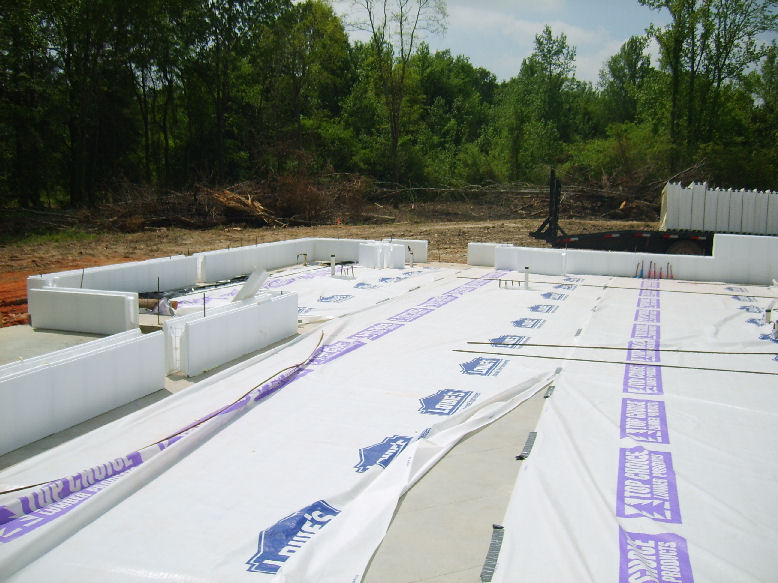
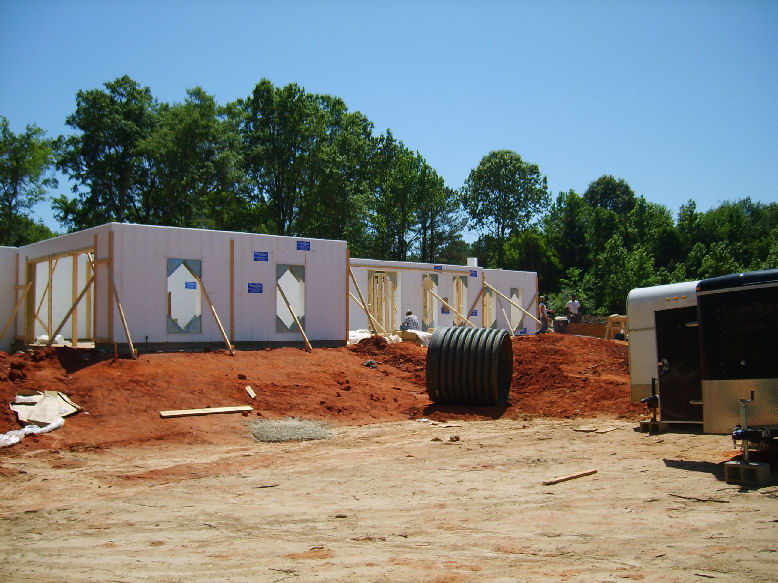
First course laid (left) and fully assembled walls braced for the pour (right)
Insulation and Energy Efficiency
Wood Frame: A typical 2x6 wood-frame wall with fiberglass batt insulation achieves R-19 to R-21. This sounds decent — until you account for thermal bridging. Real-world performance is lower than the rated value.
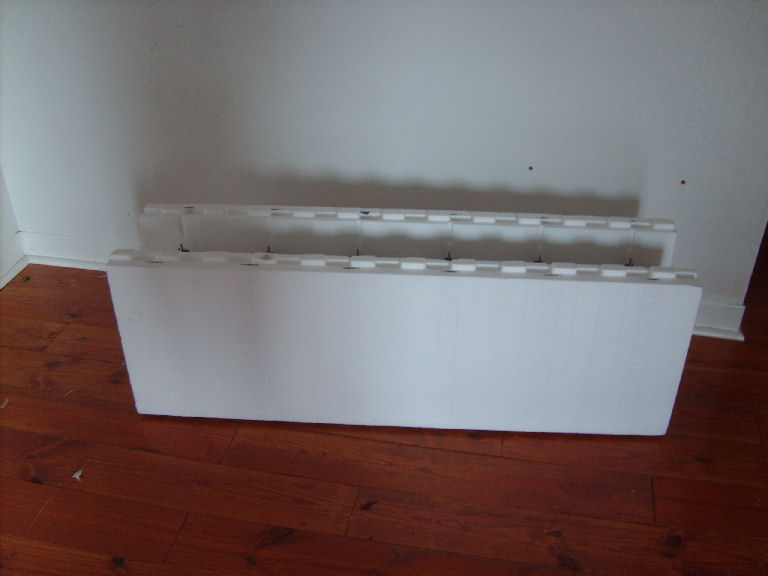
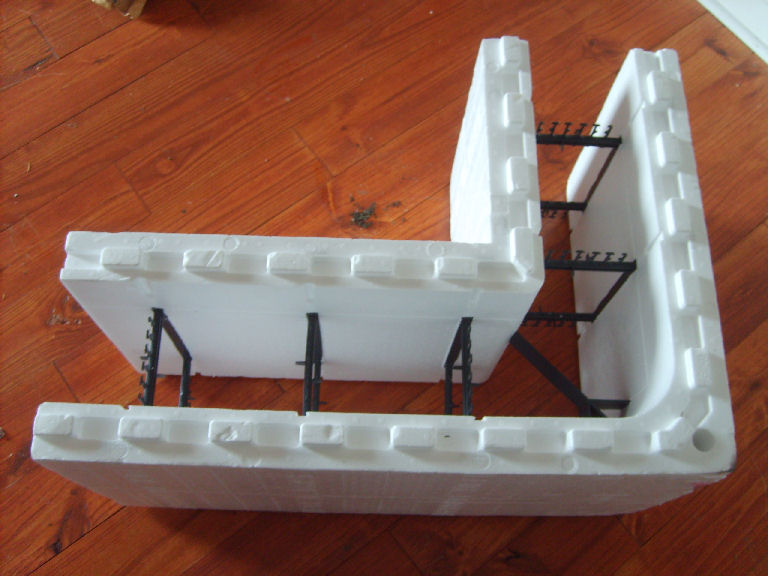
ICF: ICF walls achieve R-23 to R-50+ with no thermal bridging. The continuous foam insulation has no gaps and no studs to undermine it. The concrete core acts as thermal mass — it absorbs heat during the day and releases it slowly, reducing temperature swings.
Fire Resistance
Wood Frame: Wood burns. A wood-frame home will typically achieve a 1-hour fire rating with standard construction and drywall.
ICF: Concrete doesn't burn. An ICF wall achieves a 4-hour fire rating — four times what most wood-frame construction achieves. A 4-hour rating means fire departments have time to respond.
Soundproofing
Wood Frame: Wood-frame construction transmits noise readily. You hear traffic, neighbors, weather, and activity from other rooms.
ICF: Solid concrete walls with foam insulation provide exceptional sound attenuation — typically reducing outdoor noise by 50+ decibels compared to wood frame. Homeowners consistently describe the quiet as one of the most noticeable and unexpected differences.
Pest and Moisture Resistance
Wood Frame: Wood is vulnerable to termites, carpenter ants, and moisture infiltration. In humid coastal climates, wood-frame homes require ongoing vigilance.
ICF: Concrete doesn't rot. Concrete doesn't attract termites or carpenter ants. In Mississippi's humid climate — and anyone in the GTR knows what summers are like here — this removes an entire category of ongoing maintenance concern.
Longevity
Wood Frame: A well-maintained wood-frame home has an expected useful life of 50–80 years.
ICF: Concrete structures routinely last 100–200+ years with minimal structural maintenance. Modern ICF homes are engineered to be genuine multigenerational assets.
Upfront Cost
Wood Frame: Lower upfront cost per square foot. This is the primary reason it remains the dominant construction method.
ICF: Typically 3–8% more expensive per square foot. However: when you factor in lifetime energy savings, insurance discounts, reduced maintenance, and the likelihood of never having to rebuild after a storm, the total-cost-of-ownership math consistently favors ICF over any time horizon beyond 5–7 years.